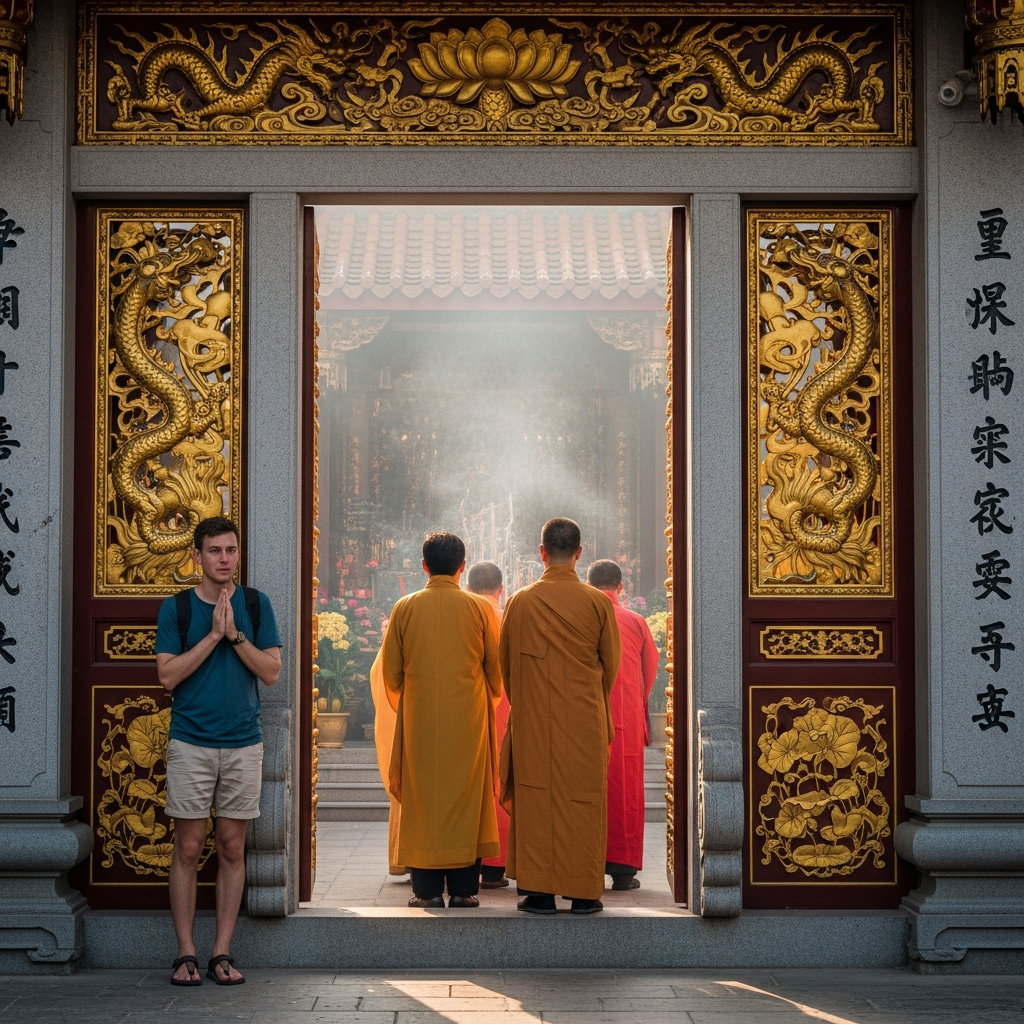
Every year, millions of tourists visit Asia without realizing they're missing the continent's most spectacular cultural experiences. The problem isn't just bad timing – it's that religious holidays in Asia follow different calendar systems that confuse even seasoned travelers. Buddhist celebrations shift with lunar cycles, Islamic dates move eleven days earlier each year, and Hindu festivals dance between solar and lunar calculations.
Think about the last time you planned an Asian trip. You probably checked weather patterns, flight prices, and hotel availability. But did you cross-reference your dates with the religious calendar of your destination? Most people don't, and they end up watching these magnificent celebrations through Instagram stories instead of experiencing them firsthand.
The disconnect between Western planning habits and Asian religious calendars creates a peculiar tourism paradox. While cultural tourism in Asia continues to grow, with travelers specifically seeking authentic experiences, the majority arrive at the wrong time. They visit Bali a week after Nyepi's silent day ceremonies, reach India days before Diwali's explosive celebrations, or leave Indonesia just as Eid preparations transform entire neighborhoods.
Here's what makes this timing challenge particularly frustrating:
- Religious dates change annually based on lunar and solar calculations
- Different countries celebrate the same holiday on different days
- Local governments sometimes adjust dates at the last minute
- Western calendar apps rarely include Asian religious festivals accurately
- Tourist information often focuses on fixed-date holidays only
The visa situation adds another layer of complexity. Many travelers secure their documents months in advance, locking in travel dates before realizing they'll miss the very festivals that attracted them to Asia. By the time they discover a major celebration is happening, it's too late to adjust their plans or extend their stay.
Consider what you're actually missing when you visit during ordinary times versus festival periods. During regular days, temples operate quietly, markets sell everyday goods, and streets follow predictable rhythms. During religious holidays, those same spaces transform into theatrical stages of devotion, tradition, and community celebration.
The financial impact is equally surprising. Hotels and flights often cost less during major religious holidays because business travelers avoid these periods. Yet these are precisely when destinations reveal their deepest cultural treasures. It's like getting front-row seats to the world's greatest show at discount prices – if only you knew when the performance was scheduled.
This guide changes that equation entirely. Instead of leaving your cultural encounters to chance, you'll learn exactly when and where Asia's most significant religious celebrations occur throughout 2025 and 2026. More importantly, you'll discover how to align your visa applications, travel bookings, and itinerary planning with these sacred dates.

Southeast Asia's spiritual landscape shifts dramatically between 2025 and 2026, offering distinct windows for cultural immersion. Vesak, Buddhism's holiest day commemorating Buddha's birth, enlightenment, and death, illuminates Indonesia on May 12, 2025. Thousands of lanterns rise at Borobudur temple while monks lead candlelit processions through ancient corridors.
Thailand celebrates this same occasion slightly differently, with dates varying by regional Buddhist traditions. Meanwhile, Myanmar transforms Vesak into a water festival where devotees pour sacred water over Buddha statues, creating photographic moments impossible to stage any other time.
India's Diwali, the festival of lights, typically falls between October and November, painting entire cities in golden illumination. Five days of celebrations include:
- Dhanteras – purchasing gold and new items for prosperity
- Naraka Chaturdashi – early morning oil baths and prayers
- Lakshmi Puja – the main celebration with fireworks and feasts
- Govardhan Puja – honoring Krishna's mountain miracle
- Bhai Dooj – celebrating sibling bonds with special ceremonies
The Islamic calendar brings its own rhythm to Asian celebrations. Ramadan begins March 1, 2025, shifting to February 19 in 2026. During this month, Malaysia, Indonesia, and Brunei transform after sunset. Night markets explode with activity, special Ramadan bazaars appear in unexpected corners, and the pre-dawn meal creates a unique community atmosphere rarely witnessed by outsiders.
Eid al-Fitr marks Ramadan's conclusion on March 29-30, 2025. Indonesia, home to the world's largest Muslim population, celebrates with mudik – a massive homecoming migration that sees Jakarta empty as millions return to their villages. Traditional ketupat (rice cakes wrapped in palm leaves) appear everywhere, while children receive green envelopes filled with money.
Chinese New Year operates on yet another calendar system. The Spring Festival welcomes the Wood Snake on January 29, 2025, followed by the Fire Horse on February 17, 2026. Singapore's Chinatown becomes a river of red lanterns, Vietnam celebrates Tet with yellow apricot blossoms, and Malaysia hosts lion dances that leap between shophouses.
Bali's Hindu calendar produces spectacular ceremonies throughout both years. Galungan occurs twice in 2025 (May 3 and November 29), when bamboo poles called penjor arch over every street. Ten days later, Kuningan brings yellow rice offerings to temples as families gather for elaborate feasts.
Japan's cherry blossom festivals, though not strictly religious, carry deep Shinto significance. The 2025 season starts in Okinawa during January, reaching Tokyo by late March. Hanami parties beneath blooming trees blend spiritual appreciation with social celebration.
Sri Lanka's Esala Perahera in Kandy (typically July or August) showcases Buddhist relics through nightly parades featuring hundreds of drummers, dancers, and decorated elephants. The tooth relic of Buddha travels through streets lined with devotees, creating Asia's most elaborate Buddhist pageant.
Lesser-known but equally mesmerizing celebrations include Nepal's Holi in March, where colored powder transforms Kathmandu into a rainbow canvas. The Philippines' Sinulog Festival honors the Santo Niño with street dancing that merges Catholic and pre-colonial traditions every third Sunday of January.

Lunar calculations determine most Asian religious observances, creating a scheduling puzzle that frustrates Western travelers accustomed to fixed dates. Islamic holidays migrate backward through the Gregorian calendar approximately eleven days annually. This means Ramadan, which starts March 1 in 2025, arrives February 19 in 2026, eventually cycling through all seasons over 33 years.
The Hijri calendar, Islam's lunar system, consists of 354 or 355 days divided into twelve months. Each month begins with the new moon's sighting, which explains why different countries sometimes observe holidays on consecutive days. Saudi Arabia's moon sighting often sets the standard, but Indonesia, Malaysia, and Pakistan make independent determinations based on local observations.
Buddhist countries follow various lunar-solar hybrid systems. Thailand's calendar runs 543 years ahead of the Gregorian calendar, while the Tibetan system incorporates astrological elements that occasionally duplicate or skip months entirely. This complexity means a single Buddhist holiday might span several weeks across different Asian nations.
Here's how major Islamic celebrations will shift:
- Mawlid an-Nabi (Prophet's Birthday): September 3, 2025 → August 24-25, 2026
- Isra and Mi'raj (Night Journey): January 27, 2025 → January 16, 2026
- Laylat al-Bara'at (Night of Forgiveness): March 13, 2025 → March 2, 2026
- Eid al-Adha (Sacrifice Feast): June 6-10, 2025 → May 27-29, 2026
- Muharram (Islamic New Year): June 26, 2025 → June 16, 2026
- Day of Ashura: July 5, 2025 → June 25, 2026
Buddhist calculations prove equally intricate. Vesak's date depends on the first full moon in May, though some traditions use April's full moon instead. Thailand adds another variable by sometimes postponing celebrations if they conflict with other significant dates. Cambodia and Laos follow similar patterns but occasionally diverge by a day or two.
The Chinese lunisolar calendar combines moon phases with solar positions, inserting leap months seven times every nineteen years to maintain seasonal alignment. This system governs not just Chinese New Year but also the Mid-Autumn Festival, Dragon Boat Festival, and Qingming tomb-sweeping day.
Hindu festivals follow the Vikram Samvat or Shaka calendars, both lunisolar systems that vary by region. Diwali always falls on the new moon between mid-October and mid-November, but the exact Gregorian date requires complex astronomical calculations. Regional variations mean Gujarat might celebrate certain festivals a day differently than Tamil Nadu.
Modern technology helps decode these systems. Apps like "Islamic Calendar" and "Buddhist Calendar" provide reasonably accurate predictions, though last-minute adjustments remain possible. Government websites in Malaysia, Indonesia, and Singapore typically announce official dates several months ahead.
Weather patterns also influence timing. Mongolia might delay Tsagaan Sar (Lunar New Year) if severe storms threaten, while outdoor festivals in Southeast Asia consider monsoon schedules. The Thaipusam procession in Malaysia, technically fixed by Tamil calendar calculations, sometimes shifts slightly to avoid the heaviest rains.
Understanding these calendar systems helps explain why booking flexibility matters. A celebration scheduled for "early June" might actually occur anywhere within a two-week window, depending on moon sightings and regional interpretations.

Strategic trip planning around Asia's sacred celebrations requires working backward from festival dates rather than forward from vacation availability. Start by identifying which spiritual experiences matter most to you – the meditative calm of Buddhist ceremonies, the explosive joy of Hindu celebrations, or the communal devotion of Islamic gatherings.
Booking accommodations demands different tactics for religious periods. Hotels near temples and mosques fill months ahead, but properties in business districts often slash rates when corporate travelers stay home. In Varanasi during Dev Deepawali, riverside guesthouses command premium prices, yet modern hotels five minutes inland offer deals.
Flight patterns shift dramatically around major observances. The days immediately before Eid see prices spike as millions travel home, but flying during the actual celebration often costs half the normal fare. Singapore to Jakarta flights triple in price before Ramadan ends, yet the reverse route remains surprisingly affordable.
Consider these booking strategies for popular festivals:
- Reserve accommodations 3-4 months ahead for Diwali in India
- Book flights to Thailand 2 months before Songkran water festival
- Secure Bali hotels 6 months prior to Nyepi for best selection
- Plan Japan cherry blossom trips 4-5 months in advance
- Lock in Sri Lankan arrangements 3 months before Esala Perahera
Transportation within countries requires special attention during religious periods. Trains in India sell out weeks before Diwali. Domestic flights in Indonesia disappear a month before Eid. Even typically reliable services like Singapore's MRT adjust schedules, while Bangkok's BTS extends hours during Loy Krathong.
Package tours targeting festival periods often cost less than independent arrangements, particularly in India and Nepal. Local operators understand crowd patterns, secure group rates at hotels, and know alternative viewing spots when main venues overflow. They also navigate the permit requirements for entering certain temples during peak celebrations.
Travel insurance becomes crucial when planning around religious dates. Standard policies might not cover disruptions from religious gatherings, and some insurers exclude coverage during known festival periods. Specialized cultural tourism insurance addresses these gaps, though premiums increase 15-20% for high-season travel.
Visa timing requires careful coordination. Tourist visas for India last six months from issue date, not arrival date, potentially expiring before Holi if obtained too early. Indonesia's visa-on-arrival works well for spontaneous festival attendance, but Malaysia's eNTRI system needs advance processing that considers celebration schedules.
Creating buffer days around target festivals prevents disappointment. Moon sighting delays, government announcements, and weather postponements regularly shift dates by 24-48 hours. Arriving three days early provides flexibility while offering chances to witness preparation rituals tourists typically miss.
Multi-country itineraries maximizes festival exposure. A two-week journey might catch Vesak in Thailand, Hari Raya preparations in Malaysia, and Waisak celebrations in Indonesia. Regional budget airlines make such combinations feasible, with AirAsia and Scoot offering festival-specific route promotions.
Off-season festivals deliver comparable experiences with fewer crowds. While everyone focuses on major celebrations, smaller observances provide intimate cultural encounters. The Pchum Ben festival in Cambodia or Thaipusam in Penang offer profound spiritual experiences without the tourist masses flooding Diwali or Songkran.

Sacred spaces across Asia welcome respectful visitors, but participation requires understanding unwritten rules that guidebooks rarely mention. Temples in Thailand prohibit entry if your shoulders or knees show, yet vendors outside happily sell scarves and sarongs to unprepared tourists. Indonesian mosques provide robes at entrances, though bringing your own demonstrates cultural awareness locals appreciate.
Photography etiquette varies wildly between locations and ceremonies. Buddhist monks in Myanmar often enjoy posing for pictures, while photographing women at Hindu temples without permission causes serious offense. Flash photography during evening prayers disrupts worship at any religious site, and some inner sanctums forbid cameras entirely regardless of settings.
Footwear protocols extend beyond simple removal. At Sikh gurdwaras, you'll also cover your head and wash your feet before entering. Japanese temples provide plastic bags for carrying shoes, while Indian temples expect you to leave them with designated attendants who charge small fees. Never point your feet toward altars or religious images – a mistake that marks you as culturally oblivious.
Document requirements for accessing religious sites during festivals include:
- Passport copies for entering certain restricted temples in Bhutan
- Special permits for non-Hindus visiting specific areas of Varanasi ghats
- Registration forms at Malaysian mosques during Ramadan prayers
- Vaccination certificates for joining mass gatherings in some regions
- Modest dress certificates from hotels in conservative Middle Eastern areas
Participating in rituals requires different levels of engagement. Lighting incense at Chinese temples welcomes anyone, but taking prasad (blessed food) at Hindu temples implies religious commitment some visitors aren't prepared to make. Buddhist meditation sessions openly include foreigners, yet joining Islamic prayers requires actual faith declaration.
Donation expectations catch many visitors off-guard. While entrance fees rarely exist, donation boxes appear prominently, and refusing to contribute after receiving blessings seems rude. Cambodian temples suggest dollar amounts, Thai temples accept whatever you offer, and Indian temples sometimes insist on specific sums for special ceremonies.
Behavioral norms during ceremonies demand heightened sensitivity. Silence during Buddhist chanting seems obvious, but knowing when to stand, sit, or bow requires observation. Hindu arti ceremonies involve passing flame offerings where participation follows specific patterns. Islamic gatherings separate genders, and crossing these invisible boundaries causes immediate problems.
Food restrictions at religious venues extend beyond personal dietary choices. Many Buddhist temples prohibit meat consumption within grounds, while Jain temples ban leather items including belts and wallets. During Ramadan, eating publicly in Muslim-majority areas shows disrespect, even for non-Muslims.
Health documentation occasionally becomes necessary. The Kumbh Mela in India requires vaccination records during disease outbreaks. Malaysian authorities might request medical clearance for elderly visitors joining physically demanding Thaipusam processions. Travel medical insurance specifically covering religious gathering participation prevents complications if accidents occur.
Visa extensions for extending festival participation need advance planning. Thailand's immigration offices close during major Buddhist holidays, making last-minute extensions impossible. India's e-visa doesn't permit extensions, requiring proper visa categories from the start. Indonesia allows single 30-day extensions, but applications must begin a week before current permissions expire.

Building your personalized festival journey starts six months before departure. Create a master spreadsheet listing target celebrations, their approximate dates, and visa processing times for each country. Cross-reference this with your work schedule and budget constraints to identify realistic options.
Step one involves selecting your anchor festival – the one unmissable celebration around which everything else revolves. Perhaps it's watching ten thousand monks collect alms during Luang Prabang's Tak Bat, or joining millions of devotees at Malaysia's Batu Caves during Thaipusam. This anchor determines your core travel dates and visa application timeline.
Next, layer in secondary celebrations within reasonable distances. If Vesak in Borobudur is your anchor, consider adding Waisak ceremonies in Yogyakarta or catching Ramadan preparations in Jakarta. These additions enrich your journey without requiring separate visa applications or expensive repositioning flights.
Your document preparation checklist should include:
- Passport validity extending 6+ months beyond return date
- Visa applications submitted according to country-specific timelines
- Yellow fever certificates for certain Southeast Asian regions
- Travel insurance covering festival-related activities
- Embassy contact information for each destination
- Digital copies of all documents stored in cloud storage
- Physical photocopies kept separately from originals
Timing visa applications requires precision. Apply too early, and validity might expire before your festival dates. Apply too late, and processing delays could derail everything. Most Asian countries process tourist visas within 5-10 business days, but factor in local holidays that pause embassy operations.
Первый Визовый Центр streamlines this complex preparation process. Rather than juggling multiple embassy websites with conflicting requirements, their specialists handle documentation across all Asian destinations. They track processing times, flag potential issues, and ensure applications align with your festival schedule.
Budget allocation for festival travel differs from standard tourism. Allocate 30% more for accommodations during peak celebrations, but reduce food budgets since temples often provide free meals. Transportation costs spike before festivals but drop during actual celebrations when locals stay put.
Pre-departure preparation extends beyond paperwork. Download offline translation apps for reading ceremony schedules posted in local languages. Pack modest clothing that covers arms and legs without requiring last-minute shopping. Bring small denominations of local currency for temple donations and vendor purchases.
Connect with expatriate communities through social media groups focused on Asian festivals. These insiders share real-time updates about schedule changes, crowd levels, and hidden ceremony locations mainstream tourists never discover. Their practical advice often proves more valuable than official tourism information.
Monitor political and weather developments that might affect celebrations. Elections, royal anniversaries, and natural disasters can prompt date changes announced just weeks ahead. Following local news sources and embassy alerts prevents arriving to find festivals postponed or relocated.
Your journey toward Asia's sacred celebrations transforms from overwhelming puzzle to organized adventure with proper planning. Whether witnessing Krishna's birthday in Mathura or joining water blessings in Luang Prabang, these festivals offer windows into humanity's deepest spiritual expressions. The memories you'll create – the incense-filled air, rhythmic chanting, and shared joy with thousands of devotees – last far longer than any conventional vacation. Start your preparation today, and by next year you'll stand among the faithful, experiencing Asia's religious heritage not as an observer but as a welcomed participant.